Let's be honest for most of history, menopause was either ignored, misunderstood, or handled in ways that would make you cringe today. Here's the real story of how we got from ancient Greece to hormone therapy, and why so many women are still sorting through the confusion.

B.C.
Blame It on Bad Humors
Way back in 384–322 B.C., Aristotle was one of the first to write about menstruation ending around age 40. But don't get too excited his take wasn't exactly progressive. Early Greek and Roman physicians believed periods were the body's way of flushing out "bad humors." When the bleeding stopped, they figured those toxins just... stayed. Their solution? Spices, fungi, and herbs to help get things moving again. Not exactly a clinical trial.
Finally, a Name
For thousands of years, this phase of life didn't even have a proper name. That changed in 1821 when a French physician finally coined the word menopause. From the Greek mēn (month) and pausis (pause). Literally, "the monthly pause." Simple, accurate, and only about 2,000 years overdue.
Wild Experiments and Accidental Breakthroughs
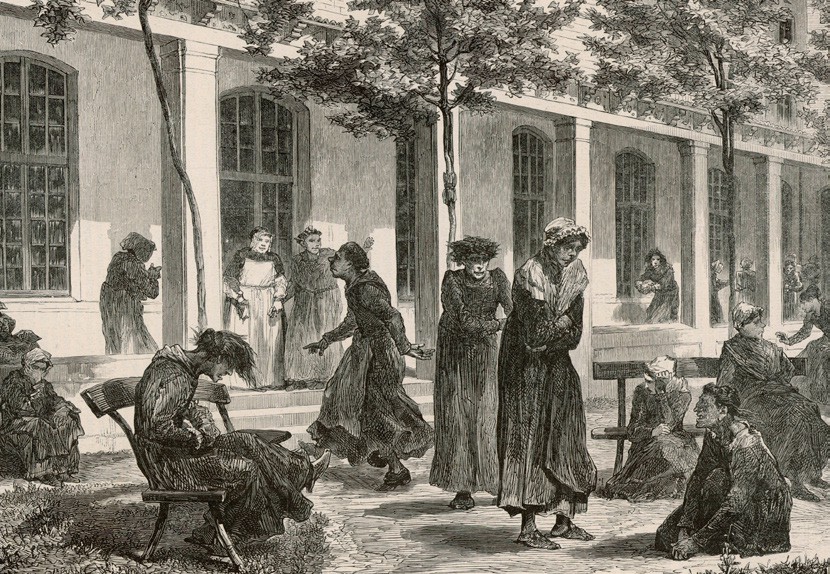
By the 1800s, doctors at least knew something was missing after menopause, they just weren't sure what to do about it. In Germany, physicians got a little creative and started injecting women with cow ovarian tissue. Sounds absolutely horrifying, right? Here's the wild part...it actually helped with symptoms. They accidentally stumbled onto something real before anyone fully understood hormones.
They accidentally stumbled onto something real before anyone fully understood hormones. Sometimes the right answer shows up before the right explanation.
Science Finally Catches Up
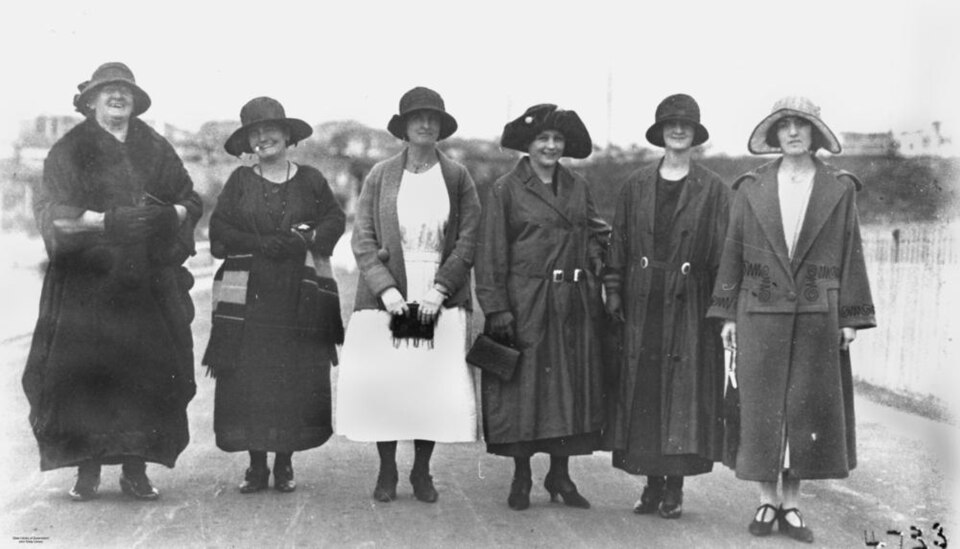
The first real breakthrough came out of Montréal General Hospital, where Canadian gynaecologist Archie Cameron used estrogen therapy. A human placental extract called Emmenin discovered by James Collip. This was the first menopause treatment we'd actually recognize today. Finally, real medicine was coming along for change.
Someone Tried to Sell Us a Cure
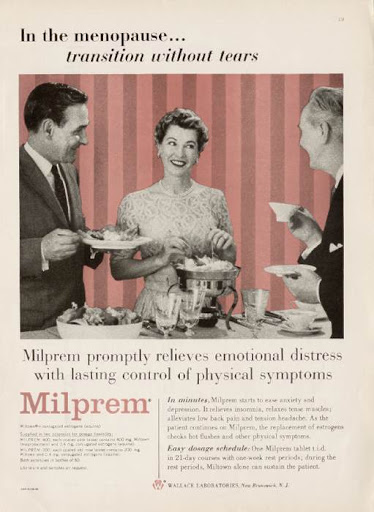
A doctor named Robert Wilson wrote a book called Feminine Forever and basically told the world that menopause was a disease. Something broken that needed fixing with estrogen. Women believed him. Doctors believed him. The book was a bestseller. Yikes!
What nobody mentioned at the time? His research was bankrolled by the pharmaceutical companies making the estrogen. Funny how that works.
The Other Shoe Drops
It didn't take long for the cracks to show. Studies started linking estrogen only therapy to uterine cancer and women who had been told this was their fountain of youth felt completely betrayed. Prescriptions tanked. Trust tanked with them. One step forward. Ten steps back
While all of this was happening, women's health advocates were asking a different question. Why are we calling menopause a disease in the first place? The women's health movement started pushing back hard, arguing that menopause wasn't something broken. It was just life. A part of a womans life
A Patch, Not a Fix
Doctors eventually figured out that adding progesterone to estrogen dramatically cut the uterine cancer risk. Combined HRT became the new standard. Confidence was slowly rebuilding. Which made what happened in 2002 hit even harder.

2002
From Confidence to Fear
For most of the early 1990s, hormone therapy was widely trusted. Doctors felt good about it. Women felt good about it. Then everything changed.
In 2002, the Women's Health Initiative (WHI) published findings that shook the medical community. Then the media ran with it hard. The headlines were alarming and almost overnight hormone therapy went from trusted treatment to something women were afraid to even ask their doctor about.
What Got Lost in the Noise
The WHI writing group's consistent negative messaging dominated coverage for over a decade. Millions of women made decisions or avoided having conversations with their doctors based on reporting that was incomplete. We're still living in the aftermath of that fear today.
Finally, the Tide is Turning
Something shifted. Women started talking loudly, publicly, and unapologetically about menopause. Celebrities, doctors, and everyday women started calling out the decades of dismissal and demanding better.
The medical community started catching up too. In 2022, major menopause societies began revising their guidelines, walking back the fear around hormone therapy and acknowledging that for many women, the benefits outweigh the risks.
Social media played a role nobody expected. TikTok, Instagram, and podcasts became communities where women finally found the conversations their doctors weren't having with them. The silence that had lasted since 2002 started breaking.
We're not all the way there yet. Too many women still sit in exam rooms and leave without answers. Too many symptoms still get dismissed as "just aging." But for the first time in a long time, the conversation is actually happening.
Two thousand years of confusion is enough.
Why This Matters For You
We're still living in the aftermath of that fear. Many women today either don't know what options exist or are too nervous to ask their doctor. The conversation that should have happened at your annual exam gets skipped. The symptoms that are very real and very treatable get dismissed — or quietly suffered through.